EV servicing is different from maintaining a conventional petrol or diesel car, but electric vehicles still need regular inspections and professional attention. While an EV has fewer moving powertrain components, its tyres, brakes, suspension, steering, battery systems and charging equipment all remain important to its overall condition.
For drivers considering an electric car or already enjoying EV ownership, understanding the maintenance requirements can make servicing easier to plan. This guide explains what technicians check, how battery servicing works, which components require attention and what UK drivers should consider when choosing an EV workshop.
What Is EV Servicing?
EV servicing involves inspecting and maintaining the systems that keep an electric vehicle safe, reliable and roadworthy. Unlike a traditional car service, there is no engine oil to replace and many familiar engine-related components are absent.
Instead, technicians may focus on areas such as the high-voltage battery system, electric motor, charging equipment, brakes, tyres, suspension, steering, cooling systems and electronic diagnostics.
The exact service requirements vary between manufacturers and models. Drivers should therefore follow the vehicle manufacturer’s recommended maintenance schedule rather than assuming that every electric car needs the same checks.
Why EV Servicing Matters
Although electric vehicles can require less routine mechanical maintenance, that does not mean they are maintenance-free. Regular inspections can help identify wear, faults or developing problems before they become more serious.
Tyres are particularly important because EVs can be relatively heavy and deliver strong acceleration instantly. Brake components also need attention, even though regenerative braking can reduce the amount of conventional friction braking used during everyday driving.
Professional servicing also provides an opportunity to inspect electronic systems and identify diagnostic faults that may not be obvious during normal driving.
What Does an EV Service Include?
The precise inspection depends on the vehicle, mileage and manufacturer’s service schedule. However, a professional EV service may include several important areas.
Battery System Inspection
The high-voltage battery is one of the most important components in an electric vehicle. Technicians can inspect relevant battery systems and use appropriate diagnostic equipment to identify faults or warning conditions.
Battery performance can change over the life of a vehicle, so monitoring its condition is an important part of responsible EV ownership. However, battery health should not be judged solely by driving range on one occasion because range can also be influenced by temperature, driving style, speed, weather and other factors.
Charging System Checks
Charging equipment is another important part of EV maintenance. A technician may inspect the vehicle’s charging connection and related systems when required by the service schedule or when a charging problem has been reported.
Drivers should also pay attention to recurring charging interruptions, warning messages or unusual behaviour. These issues can have different causes, so professional diagnosis is preferable to assuming that the battery itself is at fault.
Brake Inspection
Electric vehicles use regenerative braking to recover energy during deceleration. This can reduce reliance on conventional friction brakes during some types of driving.
However, brake discs, pads and related components still require inspection. Limited use of friction brakes can also make regular checks valuable because brake condition should not be judged only by how often the brakes are used.
Tyre and Suspension Checks
EV servicing should also consider the vehicle’s contact with the road. Tyres, suspension and steering components influence handling, comfort and stability.
Uneven tyre wear, damaged tyres or suspension problems can affect driving performance regardless of the vehicle’s powertrain. An alignment check may also be appropriate when the vehicle shows signs such as unusual tyre wear or changes in steering behaviour.
EV Servicing and Battery Maintenance
Battery maintenance is often one of the biggest concerns for new electric vehicle owners. Modern EV battery systems are designed with sophisticated management technology, but they still operate within specific temperature, charging and performance parameters.
Drivers should follow the manufacturer’s guidance for charging and battery care. There is no universal rule that every EV must be charged in exactly the same way, because battery chemistry, software and charging recommendations differ between models.
Professional battery servicing is generally more specialised than routine mechanical work. High-voltage systems require appropriate equipment, training and safety procedures, so owners should use a workshop that is suitably equipped to work on their vehicle.
Do EVs Need Oil Changes?
One of the clearest differences between EVs and conventional combustion vehicles is the absence of a traditional engine requiring regular engine-oil changes.
This can reduce some routine maintenance requirements. However, the absence of engine oil does not eliminate servicing altogether. Electric vehicles still contain mechanical and electrical components that need inspection, and consumable items such as tyres, wiper blades and certain brake components still wear over time.
Some EVs may also have other fluids or cooling systems that require attention according to the manufacturer’s maintenance schedule.
How EV Mechanics Work on Electric Vehicles
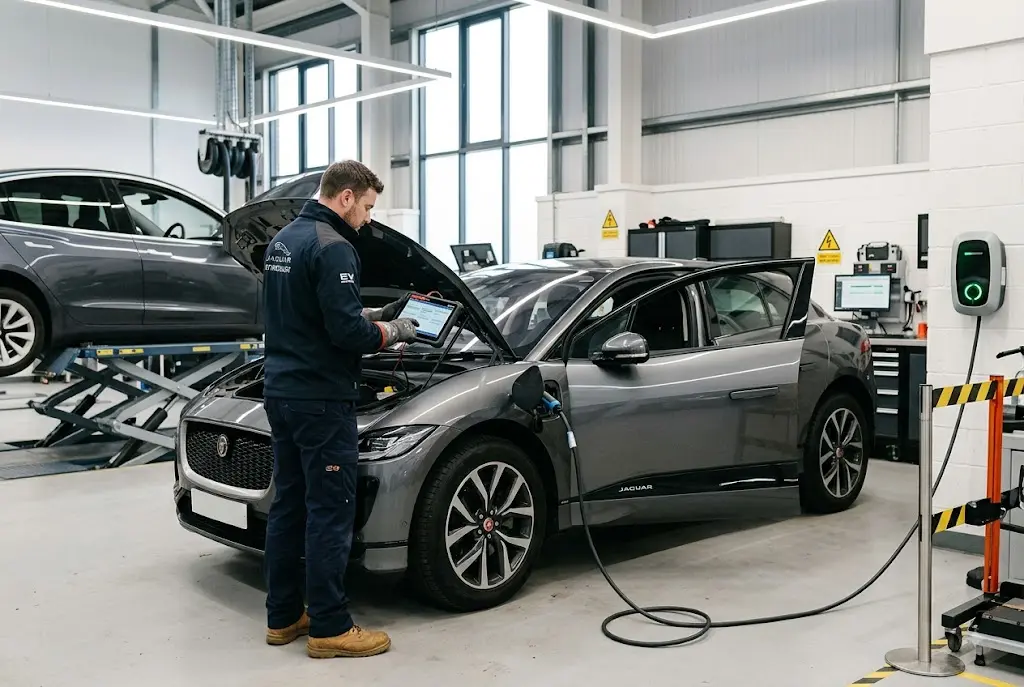
Electric vehicles contain high-voltage systems that require specialist knowledge. This means choosing an appropriate technician is particularly important when work involves the battery, electrical architecture or other high-voltage components.
Qualified EV mechanics use suitable diagnostic tools and follow manufacturer or industry procedures when inspecting and repairing electric vehicles. Routine work such as tyres or certain mechanical inspections may be available from a wider range of garages, while high-voltage repairs may require more specialised facilities.
When comparing automotive service companies, it is therefore useful to check whether the workshop has experience with the specific EV make and model you own.
How Often Should an EV Be Serviced?
There is no single servicing interval that applies to every electric vehicle. Manufacturers establish their own maintenance schedules, which can vary by model, mileage and age.
The vehicle handbook or manufacturer’s official service information should be the starting point. Some cars may use time-based schedules, mileage-based intervals or a combination of both.
Drivers should also arrange an inspection if they notice warning lights, unusual noises, changes in braking performance, charging problems, steering issues or other unexpected symptoms.
EV Servicing Costs in the UK
EV servicing costs vary according to the vehicle, workshop, service requirements and any repairs identified during an inspection. Routine servicing may be less complex in some areas than servicing a petrol or diesel vehicle because electric cars have fewer traditional engine components.
However, specialist diagnostic equipment and high-voltage expertise can be important for certain jobs. A workshop’s level of EV capability may therefore influence the price of specialist work.
When comparing prices, look beyond the headline figure. Check what inspections are included, whether diagnostic checks are part of the service and whether the garage is equipped to work on the specific vehicle.
EV Servicing vs Traditional Car Servicing
There are several similarities between electric and conventional vehicle maintenance. Both types of vehicle need tyres, brakes, suspension, steering and other safety-related components inspected.
The main difference is the powertrain. A petrol or diesel vehicle contains an internal combustion engine with components such as engine oil, spark plugs or fuel-related systems. An EV instead uses an electric motor and high-voltage battery system.
This changes the maintenance priorities but does not remove the need for professional care. In both cases, following the manufacturer’s service schedule is one of the most sensible ways to manage long-term vehicle maintenance.
Charging Infrastructure and EV Maintenance
Charging infrastructure is becoming an increasingly important part of everyday EV ownership. Drivers may charge at home, at workplaces or through public charging networks, depending on their circumstances.
While public charging infrastructure is separate from the vehicle’s routine mechanical servicing, charging behaviour can become relevant when investigating charging performance. If an EV repeatedly fails to charge or behaves differently across different charging points, professional diagnosis can help determine whether the issue originates with the vehicle, charging equipment or another part of the charging process.
The UK government’s official guidance on electric vehicle charging infrastructure provides further information for motorists and businesses.
Signs Your EV Needs Attention
EV drivers should not wait for the next scheduled service if they notice a significant change in vehicle behaviour. Warning signs can include:
- Unexpected dashboard warning messages
- Repeated charging problems
- Unusual noises or vibrations
- Changes in braking performance
- Uneven or unusually rapid tyre wear
- Steering that feels different from normal
- Unexpected changes in vehicle performance
- Visible damage to tyres, wheels or other components
Some warnings may have relatively simple causes, while others could indicate a more significant fault. A qualified technician can investigate the symptoms instead of relying on assumptions.
Choosing a Garage for EV Servicing
Not every garage provides the same level of electric vehicle support. Before booking a service, ask whether the workshop regularly works with EVs and whether technicians have the appropriate training and equipment for high-voltage systems.
It is also worth checking whether the garage can access suitable diagnostic information for your vehicle. A workshop that understands the manufacturer’s recommended maintenance procedures is better positioned to identify issues accurately.
Drivers who prefer established service networks can also compare garage chains with independent workshops. The most suitable choice depends on the vehicle, required work, location, availability and the workshop’s EV capabilities.
EV Ownership and Long-Term Maintenance
Good EV ownership involves more than monitoring battery range. Drivers should continue checking tyre pressures, inspecting tread condition, paying attention to braking performance and responding to dashboard warnings.
Keeping service records can also be useful when maintaining the vehicle over several years. Documentation can help establish what work has been completed and may be valuable when the vehicle is eventually sold.
As electric vehicles become a larger part of the UK vehicle market, access to capable EV mechanics and suitable service facilities will remain an important part of the wider automotive service sector.
Final Thoughts on EV Servicing
EV servicing focuses on a different set of priorities from traditional car maintenance, but electric vehicles still need regular professional attention. Battery systems, charging equipment, brakes, tyres, suspension, steering and electronic diagnostics can all play a role in keeping an EV in good condition.
The best approach is to follow the manufacturer’s service schedule, respond promptly to unusual symptoms and choose a workshop with appropriate EV knowledge and equipment. With sensible maintenance, drivers can manage the practical demands of electric vehicle ownership while keeping safety and reliability at the centre of their routine.