Reliable home repair services can make a major difference when something in your property stops working, becomes damaged or simply needs attention. From faulty appliances and leaking fixtures to damaged doors, fittings and general household wear, some problems can be handled quickly while others require a qualified professional.
Knowing what type of repair you need is the first step. It can help you find the right tradesperson, explain the problem clearly and compare quotations more effectively. This guide covers common household repairs, appliance problems and the situations where professional assistance is usually worth considering.
What Are Home Repair Services?
Home repair services cover a broad range of work intended to restore, maintain or improve parts of a residential property. The exact service depends on the problem and may involve a general handyman, appliance technician, plumber, heating engineer or another specialist.
Common household repair work can include:
- Repairing damaged doors and handles
- Fixing leaking taps and plumbing fixtures
- Repairing or replacing damaged fittings
- Addressing minor household maintenance problems
- Repairing household appliances
- Fixing damaged fixtures and fittings
- Carrying out general property maintenance
- Diagnosing problems that require specialist attention
Not every professional provides every type of service. Before booking, confirm that the contractor has the appropriate skills and qualifications for the particular job.
Repair Home Appliances or Replace Them?
One of the most common household decisions involves whether to repair home appliances or replace them. The right choice depends on the appliance’s age, condition, fault and estimated repair cost.
A relatively minor fault may be worth repairing, particularly if the appliance is otherwise in good condition. However, an older appliance with repeated failures or an expensive major component may require a different approach.
Before approving a repair, ask for a clear explanation of the fault and an estimate of the likely cost. If a replacement part is required, check whether the quotation includes both the component and labour.
How to Fix Home Appliances Safely
People often search online for ways to fix home appliances themselves. While some basic maintenance tasks may be suitable for homeowners, appliance repairs can involve electricity, gas, heat, water or moving components.
For that reason, avoid dismantling an appliance unless you understand the risks and the manufacturer’s guidance allows the work. A seemingly simple fault can have an underlying cause that is not immediately visible.
Professional appliance repair can be particularly useful when:
- The appliance does not power on
- A fault code keeps appearing
- The appliance is leaking
- There is unusual noise or vibration
- Heating elements are not working correctly
- The problem returns after a basic reset
- Electrical or gas components may be involved
For gas-related work, use an appropriately qualified professional rather than attempting a repair yourself.
Common Household Repairs Homeowners Encounter
Household repairs are not limited to major breakdowns. Small problems can appear throughout a property as fixtures age and everyday use takes its toll.
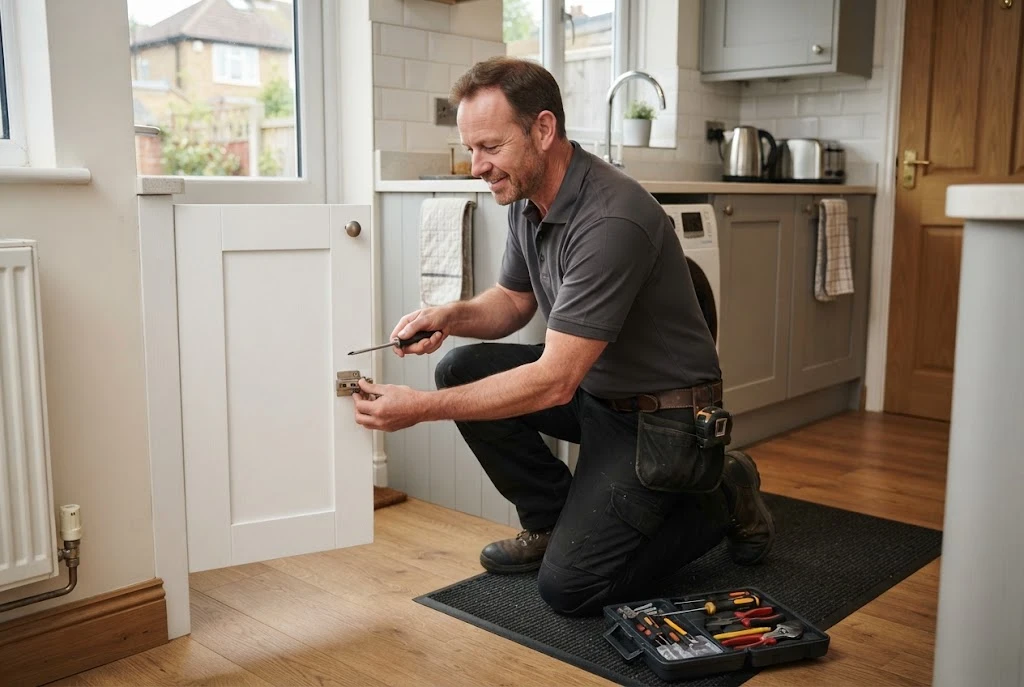
Examples include loose door handles, sticking doors, damaged hinges, dripping taps, faulty cupboard fittings, broken shelves and damaged wall fixtures. Some of these jobs may be suitable for a handyman, while others need a specialist.
Identifying the nature of the problem before contacting a contractor can make the process more efficient. Take photographs where appropriate and describe what happened, when it started and whether the issue is getting worse.
Home Fixing Services: When a Handyman Can Help
Home fixing services provided by a handyman can be useful for multiple smaller jobs around a property. Rather than arranging separate appointments for every minor issue, homeowners may be able to group suitable tasks into one visit.
A handyman may handle general jobs such as:
- Putting up shelves
- Adjusting doors and handles
- Replacing basic household fittings
- Repairing minor fixtures
- Assembling household furniture
- Carrying out general maintenance tasks
However, a handyman is not automatically suitable for every repair. Jobs involving gas, complex electrical systems, structural problems or other regulated specialist work may require a suitably qualified tradesperson.
Property Repair Services for Larger Problems
Property repair services can cover more substantial issues that affect the condition or functionality of a home. These may involve specialist trades depending on the nature of the problem.
Examples could include significant plumbing issues, heating faults, damaged fixtures, water-related problems or other building maintenance concerns. The appropriate professional depends on the cause rather than simply the visible symptom.
For example, a damp patch on a wall does not necessarily mean the wall itself needs repairing. The underlying source could be a plumbing leak, condensation or another issue. Identifying the cause before completing cosmetic work can prevent the problem from returning.
When Should You Call a Professional?
Knowing when to stop a DIY project and seek professional assistance is an important part of responsible home maintenance.
Professional help is generally worth considering when:
- The repair involves gas or complex electrical systems.
- You cannot identify the cause of the problem.
- The fault keeps returning.
- The repair requires specialist tools.
- The work could create a safety risk.
- The problem involves structural elements.
- Water damage is spreading.
- The manufacturer’s instructions require qualified servicing.
Trying to save money by attempting unsuitable repairs can sometimes result in additional damage or a more expensive professional repair later.
How Much Do Home Repair Services Cost?
The cost of household repair work varies according to the type of job, labour time, location, materials and complexity. Emergency work can also involve additional charges.
Before approving a repair, ask whether the quotation includes:
- Labour
- Parts and materials
- Call-out charges
- Diagnostic fees
- Travel costs
- Waste disposal where applicable
- VAT where applicable
For a broader overview of household pricing, see our guide to home service costs UK. Comparing quotations on a like-for-like basis can make it easier to understand the actual value of each option.
Home Repair Services vs Routine Maintenance
Repair and maintenance are closely related but serve different purposes. Maintenance is generally intended to keep a system, appliance or property component in reasonable working condition. Repair addresses a problem that has already developed.
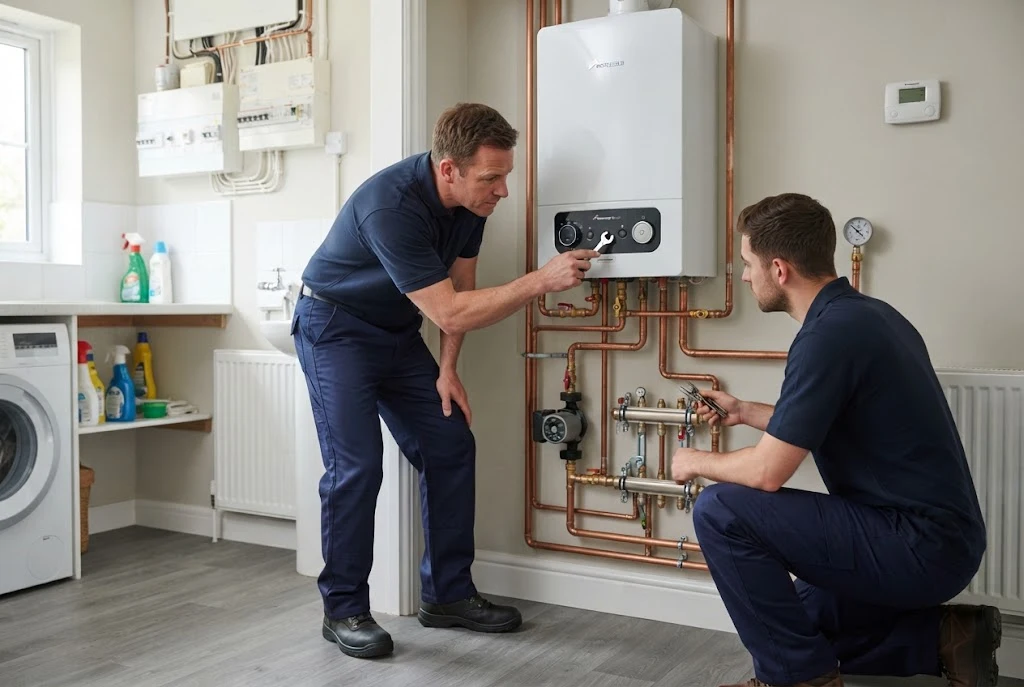
Regular maintenance can sometimes identify developing faults before they cause a larger disruption. For example, routine boiler servicing can identify issues that require attention before heating performance deteriorates significantly.
If your heating system needs attention, our guide explaining what a boiler service includes provides a useful overview of the checks involved in professional boiler servicing.
How to Choose a Home Repair Professional
Finding a suitable professional involves more than searching for the lowest price. Look for someone whose skills match the job and who can clearly explain the proposed work.
Before hiring, consider:
- Relevant qualifications or registration
- Experience with the specific type of repair
- Clear pricing and scope of work
- Availability and expected completion time
- Insurance where appropriate
- Written quotations for larger jobs
- Warranty or guarantee information where applicable
For specialist work, verify the relevant professional registration or qualification rather than assuming that a general contractor can safely perform every type of repair.
How to Prepare for a Repair Visit
Good preparation can help a contractor diagnose the problem more efficiently. Clear access to the affected area and remove unnecessary items where practical.
Make a note of when the problem began and whether anything changed immediately before it occurred. For appliances, record any visible error codes or unusual behaviour. Photographs can also help a professional understand the issue before arriving.
If multiple small jobs need attention, make a list before the appointment. This can help determine whether they can reasonably be completed during the same visit.
Cleaning, Repairs and Wider Home Maintenance
Home maintenance often involves more than fixing faults. Keeping a property clean, serviced and maintained can help homeowners manage everyday wear and identify problems earlier.
If your property also needs regular cleaning, our guide to professional cleaning services explains the difference between routine domestic cleaning and deeper cleaning requirements.
Likewise, if you are planning several household jobs at once, understanding the factors behind different service prices can help you build a more realistic maintenance budget.
Final Thoughts on Home Repair Services
Home repair services can cover everything from minor household fixes to specialist work involving appliances, heating, plumbing and property maintenance. The most important step is to identify the problem accurately and choose a professional whose skills match the work required.
For straightforward maintenance, a handyman may be sufficient. For specialist or safety-sensitive work, an appropriately qualified tradesperson should be used. When comparing providers, look at the complete quotation, including labour, materials, call-out fees and any additional charges.
Keeping track of repairs and routine maintenance can also make household management easier. By dealing with problems promptly and using the right professional when needed, homeowners can keep their properties functional, comfortable and easier to maintain over time.