
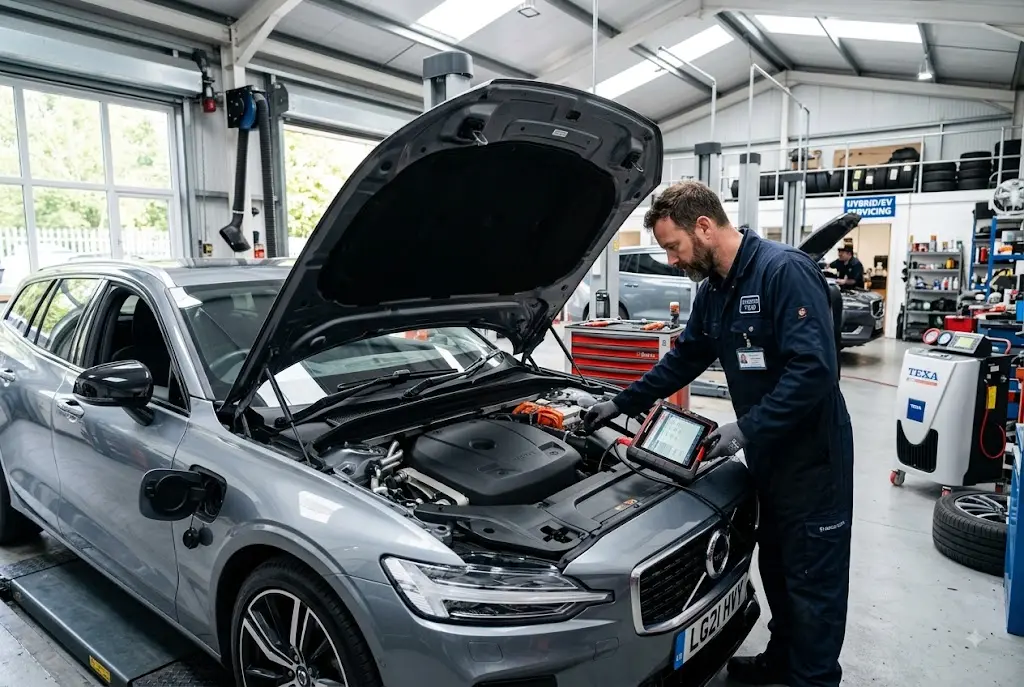
Hybrid servicing is an important part of keeping a hybrid vehicle reliable, efficient and safe to drive. Although hybrid cars combine an internal combustion engine with electric technology, their maintenance requirements are not simply a mixture of petrol-car and electric-car servicing. Different systems work together, so professional inspections need to consider the engine, electric motor, battery system, brakes, tyres and supporting electronics.
For UK drivers considering hybrid ownership, understanding these requirements can make routine maintenance easier to plan. This guide explains what hybrid servicing involves, which components technicians inspect, how battery maintenance fits into ownership and what to consider when choosing a suitable workshop.
What Is Hybrid Servicing?
Hybrid servicing involves inspecting and maintaining the mechanical, electrical and safety systems used by a hybrid vehicle. Unlike a conventional petrol car, a hybrid has an additional electric drivetrain and battery system that work alongside the combustion engine.
The exact service requirements depend on the vehicle’s make, model, age, mileage and manufacturer recommendations. Some hybrids use different powertrain designs and battery technologies, so owners should always refer to the specific maintenance schedule for their vehicle.
A professional service can include checks of the engine, fluids, brakes, tyres, suspension, steering, electrical systems and hybrid-specific components. Diagnostic equipment may also be used to identify stored fault codes or warning conditions.
Why Hybrid Servicing Matters
Hybrid vehicles are designed to manage two sources of propulsion efficiently, but that does not mean they are maintenance-free. Regular servicing helps identify wear and developing faults while providing an opportunity to assess components that are important to safe and dependable driving.
The combustion engine still needs appropriate maintenance, while the electric drivetrain introduces additional systems that require specialist knowledge. Brake components also deserve attention because regenerative braking can reduce the frequency with which conventional friction brakes are used.
Routine maintenance can therefore help owners understand the condition of both sides of the hybrid powertrain instead of focusing only on the petrol engine.
What Does Hybrid Servicing Include?
The precise checks vary between vehicles, but a typical hybrid service can cover several key areas.
Engine and Fluid Checks
Most hybrid vehicles still have a combustion engine, which means conventional engine maintenance remains relevant. Depending on the manufacturer’s service schedule, technicians may inspect or replace engine oil, filters and other service items.
Coolant and other vehicle fluids may also require inspection. The correct fluids and replacement intervals depend on the vehicle, so owners should follow the manufacturer’s specifications rather than applying a generic service schedule.
Hybrid Battery Inspection
The hybrid battery is a central component of the vehicle’s electric drivetrain. It stores electrical energy and works with the vehicle’s control systems to support electric propulsion and energy recovery.
Battery maintenance does not necessarily mean physically opening or repairing the battery pack during every service. Instead, technicians may use diagnostic systems and relevant inspections to assess the condition of the hybrid system and identify warning conditions.
If a hybrid system warning appears on the dashboard, professional diagnosis is particularly important because the underlying cause may involve the battery, control electronics, cooling system or another component.
Brake System Checks
Regenerative braking allows a hybrid vehicle to recover some energy during deceleration. As a result, the conventional friction brakes may be used differently from those in a non-hybrid vehicle.
However, brake pads, discs and other braking components still require inspection. Reduced use does not mean these components can be ignored. Regular checks help identify wear, corrosion or other issues before they affect braking performance.
Tyre, Steering and Suspension Checks
Hybrid servicing should also consider the components that connect the vehicle to the road. Tyres, steering and suspension influence handling, comfort and stability regardless of the powertrain.
Drivers should pay attention to uneven tyre wear, changes in steering response or unusual noises. Where necessary, a technician may recommend additional inspection or wheel alignment to investigate handling or tyre-related concerns.
Hybrid Servicing and Battery Maintenance
Battery maintenance is one of the areas that often causes uncertainty for hybrid owners. Hybrid batteries operate as part of a controlled electrical system, with vehicle electronics managing charging and energy use.
Drivers generally do not need to perform specialist battery work themselves. Instead, they should follow the manufacturer’s operating and maintenance guidance and arrange professional diagnosis when warning lights or unusual behaviour occur.
Battery cooling can also be important in some hybrid designs. If a vehicle uses dedicated cooling components for its battery system, keeping those systems in the condition specified by the manufacturer can form part of appropriate maintenance.
Because hybrid battery systems can involve high-voltage components, repairs should be handled by technicians with the necessary training, equipment and procedures.
Toyota Hybrid Service: What Owners Should Know
A Toyota hybrid service follows the maintenance requirements of the specific Toyota model rather than a universal hybrid checklist. Toyota has produced a wide range of hybrid vehicles, and service schedules can differ according to the vehicle and market.
Toyota hybrid owners should therefore use the manufacturer’s recommended service information as the primary reference for intervals and required checks.
When choosing an independent workshop, it is sensible to ask whether technicians have experience with the particular Toyota hybrid model and whether they have suitable diagnostic equipment. For manufacturer-specific requirements, owners may also wish to compare an authorised workshop with an independent specialist.
How Often Should a Hybrid Be Serviced?
There is no single service interval that applies to every hybrid vehicle. Manufacturers determine recommended schedules according to the vehicle’s design, components, mileage and age.
Some servicing requirements are mileage-based, while others may be linked to time. The owner’s handbook and official manufacturer information should therefore be used to determine the appropriate schedule.
Drivers should also arrange an inspection outside the normal service schedule if they notice warning lights, unusual noises, changes in braking performance, charging or battery-related warnings, or other unexpected changes in vehicle behaviour.
Hybrid Servicing Costs in the UK
The cost of hybrid servicing depends on several factors, including the vehicle, service level, workshop, mileage and any repairs identified during the inspection.
Hybrid servicing can sometimes cost more than a basic conventional-car service because technicians may require specialist diagnostic equipment and additional hybrid-system expertise. At the same time, some hybrid components can experience different wear patterns from those found on conventional vehicles.
When comparing quotes, motorists should check exactly what the service includes. A cheaper advertised price may not provide the same inspection coverage as a more comprehensive service.
Hybrid Services vs Conventional Car Servicing
There is considerable overlap between hybrid services and conventional vehicle maintenance. Both types of car require attention to tyres, brakes, suspension, steering, fluids and other safety-related components.
The main difference is the additional electric drivetrain. Hybrid vehicles combine an internal combustion engine with electric motors, battery systems and electronic controls. This means technicians need to understand how the different systems interact.
For this reason, choosing a workshop with genuine hybrid experience can be more important than simply selecting the nearest garage.
Signs Your Hybrid Needs Attention
Hybrid owners should take changes in vehicle behaviour seriously, particularly when they appear suddenly. Warning signs can include:
- Hybrid system warning lights
- Unusual engine or motor noises
- Changes in braking behaviour
- Unexpected changes in fuel economy
- Reduced or unusual electric assistance
- Unusual vibrations or handling changes
- Repeated dashboard warnings
- Problems starting or operating the vehicle normally
These symptoms do not automatically mean that the hybrid battery has failed. Several different components can produce similar symptoms, so proper diagnostic testing is preferable to replacing parts based on guesswork.
Choosing a Workshop for Hybrid Servicing
Not every garage has the same level of hybrid expertise. Before booking, ask whether the workshop regularly services hybrid vehicles and whether its technicians have appropriate training for high-voltage systems.
It is also useful to ask whether the garage has suitable diagnostic equipment for your vehicle’s make and model. This can be particularly important when investigating hybrid-system warning lights or electronic faults.
Drivers comparing garage chains with independent workshops should consider technician expertise, equipment, service coverage, convenience and customer support rather than looking only at the headline price.
Hybrid Ownership and Everyday Maintenance
Good hybrid ownership begins with following the manufacturer’s maintenance schedule, but everyday checks also matter. Drivers should regularly monitor tyre pressures, inspect tread condition and pay attention to changes in steering, braking or vehicle performance.
Keeping servicing records can make long-term ownership easier as well. A clear history shows when routine maintenance was completed and can be useful if the vehicle is eventually sold.
It is also worth remembering that a hybrid’s electric components do not remove the need for traditional vehicle maintenance. The engine, tyres, brakes, suspension and other systems still need appropriate care.
Hybrid Vehicles and Sustainable Mobility
Hybrid vehicles occupy an important position between conventional combustion vehicles and fully electric cars. Their ability to combine an engine with electric propulsion has made them a practical option for drivers who want to reduce reliance on conventional engine operation without moving immediately to a fully electric vehicle.
However, sustainable mobility is not only about the type of powertrain. Keeping an existing vehicle properly maintained can also support reliable and efficient long-term use. Responsible servicing helps owners identify mechanical and electrical issues before they become more serious.
As the UK’s transport landscape continues to change, hybrid servicing will remain relevant for motorists who choose hybrid technology as part of their approach to vehicle ownership.
Final Thoughts on Hybrid Servicing
Hybrid servicing combines many familiar vehicle maintenance tasks with specialist checks for the electric drivetrain and high-voltage systems. Engine maintenance, battery diagnostics, brakes, tyres, suspension, steering and electronic systems can all form part of maintaining a hybrid vehicle properly.
The best approach is to follow the manufacturer’s recommended schedule, investigate warning signs promptly and choose a workshop with appropriate hybrid knowledge. Owners of models such as Toyota hybrids should also consider whether a chosen garage has experience with their specific vehicle.
With the right maintenance routine, hybrid ownership can remain practical and predictable while helping drivers understand the condition of the technology that powers their vehicle.
For official UK information about vehicle testing and roadworthiness, motorists can consult the GOV.UK MOT guidance.