Thoughtful home adaptations for elderly residents can make everyday life easier, safer and more comfortable. As mobility, balance or physical needs change, features that once seemed perfectly practical can become difficult to use. A steep staircase, slippery bathroom floor, awkward entrance or poorly positioned fitting may create unnecessary challenges.
The good news is that improving accessibility does not always require a complete renovation. Some changes are simple and affordable, while others involve more substantial modifications. The right approach is to identify the person’s needs first, prioritise the areas that matter most and choose improvements that make the home easier to use without compromising comfort or appearance.
What Are Home Adaptations for Elderly Residents?
Home adaptations are physical changes made to a property to improve accessibility, safety and everyday usability. For older people, these modifications can help make essential activities easier and allow them to navigate familiar spaces with greater confidence.
Adaptations can range from small improvements, such as additional handrails and better lighting, to larger projects involving bathrooms, entrances, kitchens or internal layouts.
The most appropriate solution depends on the individual and the property. A modification that works well in one home may not be suitable for another, which is why accessibility should be considered on a room-by-room basis.
Why Are Home Accessibility Services Important?
Home accessibility services can help identify barriers that are easy to overlook during everyday life. A professional assessment can consider how someone enters the property, moves between rooms, uses the bathroom, prepares food and accesses essential household facilities.
This broader perspective is useful because accessibility is not simply about adding grab rails. The position of furniture, width of walking routes, floor surfaces, lighting and the height of fixtures can all affect how easy a home is to use.
Professional support can also be particularly valuable when a proposed modification involves structural work or specialist equipment. Getting the design right before installation can prevent unnecessary expense and reduce the likelihood of having to alter the work later.
Elderly Home Modifications for Safer Everyday Living
Elderly home modifications should focus on practical problems that affect daily routines. Start by identifying areas where movement is difficult, where support is needed or where a household task feels unnecessarily risky.
Several improvements may be considered depending on the property:
- Installing secure handrails on stairs and in suitable areas.
- Improving lighting in hallways, entrances and stairways.
- Removing unnecessary obstacles from walking routes.
- Replacing damaged or uneven flooring.
- Improving access to bathrooms and showers.
- Positioning commonly used items within comfortable reach.
- Improving access around entrances and external paths.
- Adding suitable support features where professional advice recommends them.
These changes should be selected based on actual needs rather than simply installing as many adaptations as possible. A well-planned home is one that feels natural to use rather than one filled with unnecessary equipment.
Bathroom Adaptations for Older Residents
The bathroom is often an important area to consider when planning accessibility improvements. Water and smooth surfaces can create additional challenges, while bathing, showering and using the toilet may involve movements that become harder with reduced mobility.
Possible modifications include secure grab rails, suitable shower seating, improved access and changes to bathroom fittings. In some cases, a larger redesign may be appropriate if the existing layout makes movement or transfers particularly difficult.
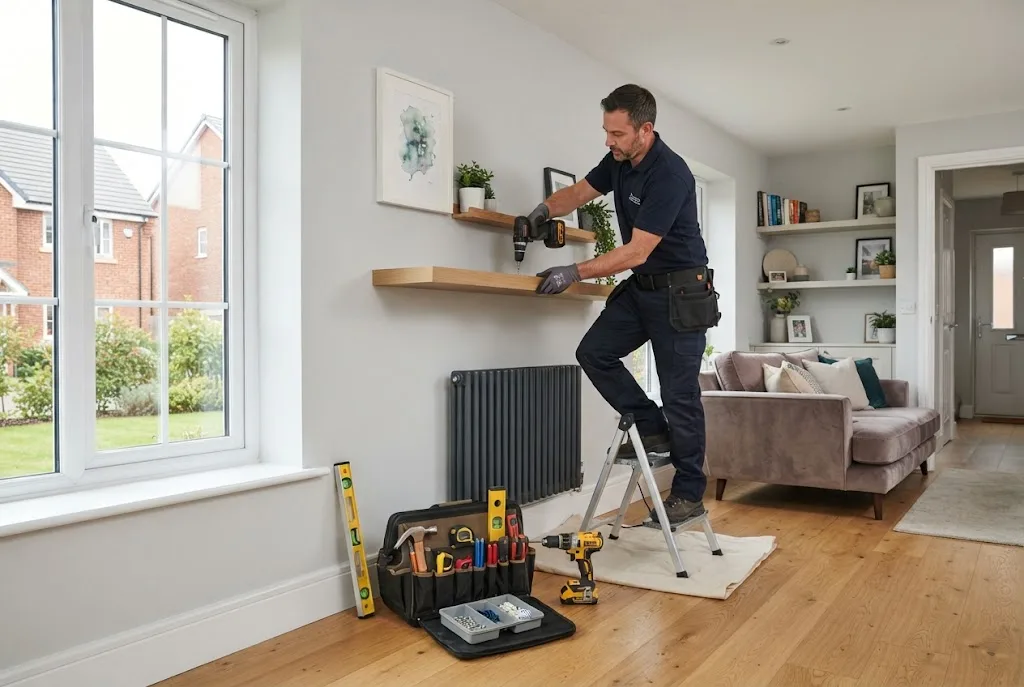
Any support equipment needs to be installed securely and positioned appropriately. A poorly positioned rail or unsuitable fitting may not provide the assistance expected from it.
Mobility Home Improvements Around the Property
Mobility home improvements can help create clearer and more practical routes through frequently used areas. Sometimes the best solution is surprisingly simple.
Furniture can be rearranged to create wider walking paths. Loose objects can be removed from corridors, while frequently used belongings can be moved to accessible storage areas. Better lighting can also improve visibility, particularly around stairs and entrances.
Where a person uses mobility equipment, room dimensions and access routes become even more important. Doors, furniture placement and turning space should be considered together rather than separately.
Making Stairs Easier to Use
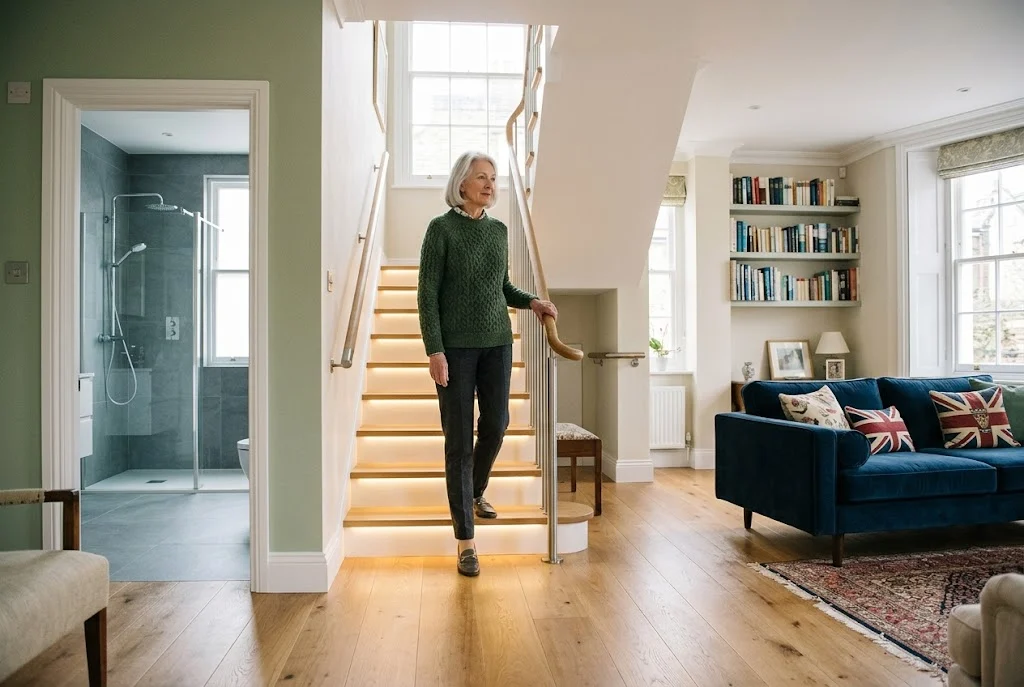
Stairs can become challenging when balance or strength changes. Secure handrails on appropriate sides, improved lighting and clear steps can make a staircase easier to navigate.
For some homes and circumstances, a more significant accessibility solution may be considered. However, the right choice depends on the person’s mobility, the staircase design and how frequently different parts of the property need to be accessed.
Improving Entrances and Doorways
The main entrance is another area that deserves attention. Uneven paths, poor lighting, difficult thresholds and awkward door hardware can make entering or leaving the home unnecessarily difficult.
Improvements may involve better external lighting, clearer access routes or changes to the entrance itself. Where major alterations are being considered, professional planning can help ensure that the finished access route is practical and safe.
Home Safety Adaptations to Prioritise
Home safety adaptations are most useful when they address specific risks. Rather than attempting to change the entire property immediately, begin with the areas that are used most often or where difficulties have already occurred.
Look closely at stairs, bathrooms, kitchens, entrances and corridors. Check for loose flooring, poor lighting, trailing cables, clutter and furniture that restricts movement.
It is also worth considering how everyday objects are stored. If someone regularly needs to reach high cupboards or bend down to access essential items, reorganising storage may provide an immediate practical improvement.
Lighting and Visibility Improvements
Good lighting is an important part of an accessible home. Dark hallways, poorly illuminated stairs and dim entrances can make navigation more difficult.
Consider whether commonly used routes are adequately lit during both daytime and evening. Light switches should ideally be easy to access, and important areas should not depend entirely on a single poorly positioned light source.
External lighting can also make entrances and pathways easier to use, particularly during darker months.
How to Plan Home Adaptations for Elderly Residents
Good planning starts with the person who will actually use the home. Instead of beginning with products or building work, identify the activities that have become difficult.
For example, if showering is difficult, focus first on bathroom accessibility. If stairs are the main challenge, assess the staircase and consider whether changes to the handrails, lighting or wider access arrangements would help.
Start With the Highest-Priority Areas
Not every room needs to be adapted. Prioritising frequently used areas can make a limited budget go further and deliver more meaningful improvements.
Bathrooms, bedrooms, kitchens, entrances and routes between essential rooms are often useful starting points because they support everyday routines.
Consider Long-Term Usability
Where possible, think beyond the immediate problem. An adaptation should ideally remain useful if accessibility requirements change over time.
This does not mean making expensive changes without a clear reason. Instead, consider whether the proposed design is flexible enough to remain practical as circumstances evolve.
Professional Accessibility Assessment
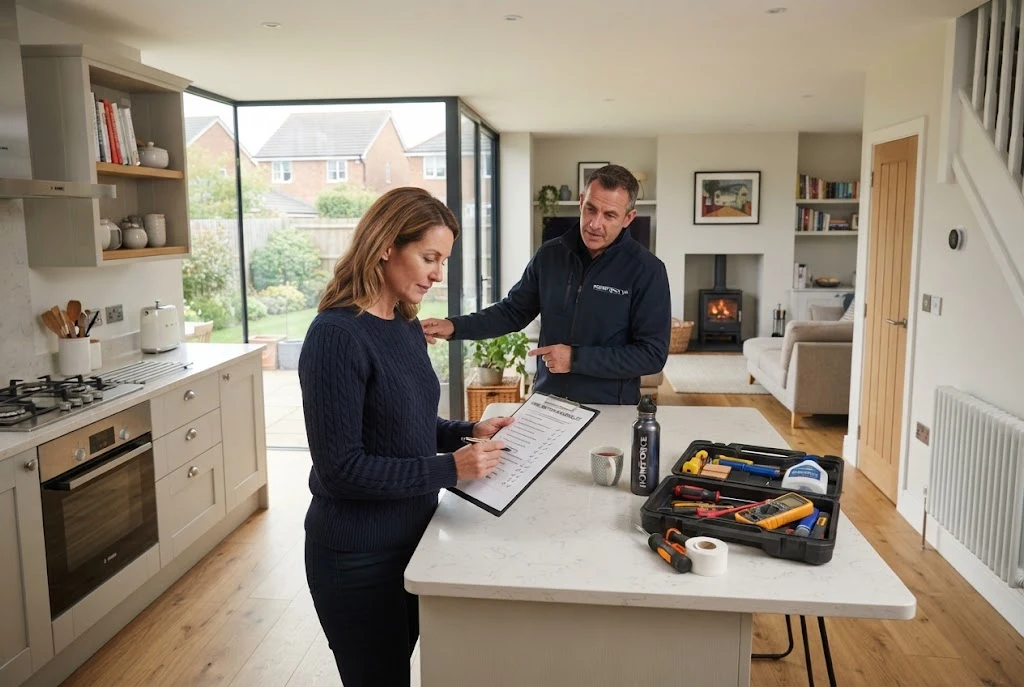
Some changes can be managed through ordinary home improvement work, but more complex projects may benefit from professional assessment. An experienced specialist can consider dimensions, access requirements, room layouts and the practical use of proposed adaptations.
This is particularly important when structural changes are being considered. Moving walls, altering bathrooms or significantly changing entrances requires careful planning so that the final result works as intended.
When comparing contractors, ask what is included in the assessment, design and installation process. For larger projects, obtain a clear quotation and make sure you understand which materials, labour and finishing work are included.
Combining Accessibility With General Home Maintenance
Accessibility improvements should form part of wider property maintenance. A home can have excellent accessibility features but still become difficult to use if lighting fails, flooring becomes damaged or household systems develop faults.
Electrical safety is particularly important because lighting, switches and other electrical features may be part of an accessibility project. Our guide to home electrical repairs explains common electrical problems and when professional assistance may be appropriate.
Plumbing can also become relevant when adapting bathrooms, kitchens or other frequently used areas. If a plumbing problem develops during or after an improvement project, our guide to plumbing services near me provides practical information about household plumbing repairs and emergency support.
For households considering protection against several types of unexpected household problems, our guide to home emergency cover explains how boiler, electrical and plumbing assistance may differ from ordinary maintenance.
Accessibility Without Losing the Character of Your Home
Accessibility improvements do not necessarily need to make a property look clinical or institutional. Modern home improvements can often incorporate safety and mobility features into the existing design.
For example, handrails can be selected to complement the home’s interior, while bathroom improvements can use contemporary fittings and finishes. Furniture can also be rearranged without replacing everything in the room.
The goal should be a home that is both functional and comfortable. Good accessibility design works with the property rather than making safety features feel like an afterthought.
Budgeting for Elderly Home Modifications
The cost of adaptations varies widely depending on the size and complexity of the project. A few basic changes may require relatively little work, while bathroom renovations or structural modifications can involve considerably more planning and expense.
A sensible approach is to separate improvements into priorities. Deal with immediate safety concerns first, then consider changes that improve convenience and long-term accessibility.
For larger projects, obtain more than one quotation where practical and ask contractors to explain exactly what their prices include. This makes it easier to compare proposals on a like-for-like basis.
Common Mistakes to Avoid
One common mistake is choosing an adaptation because it sounds useful without considering whether it is suitable for the individual. Another is focusing on one room while overlooking the route needed to reach it.
It is also important not to install support equipment casually. Rails, seats and other fittings need to be appropriate for their intended use and securely installed.
Finally, avoid treating accessibility as a one-time project. People’s needs can change, so the home may need further adjustments in the future.
Final Thoughts on Home Adaptations for Elderly Residents
Home adaptations for elderly residents can make a meaningful difference to safety, comfort and everyday independence. The best improvements are practical, well planned and based on the actual challenges faced by the person living in the property.
Start by identifying the most important barriers around the home. Consider lighting, walking routes, bathrooms, stairs, entrances and frequently used living areas before deciding which modifications are necessary.
Small changes can sometimes provide valuable improvements, while larger projects may require professional assessment and installation. By combining accessibility planning with good general home maintenance, homeowners can create a property that remains practical, comfortable and easier to use as needs evolve.