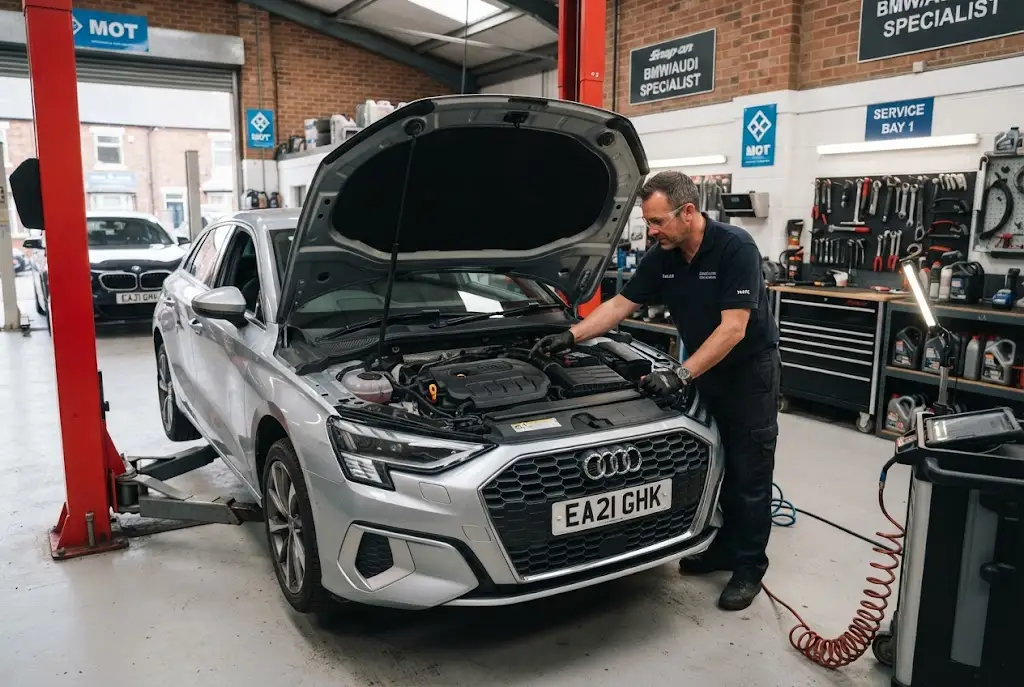
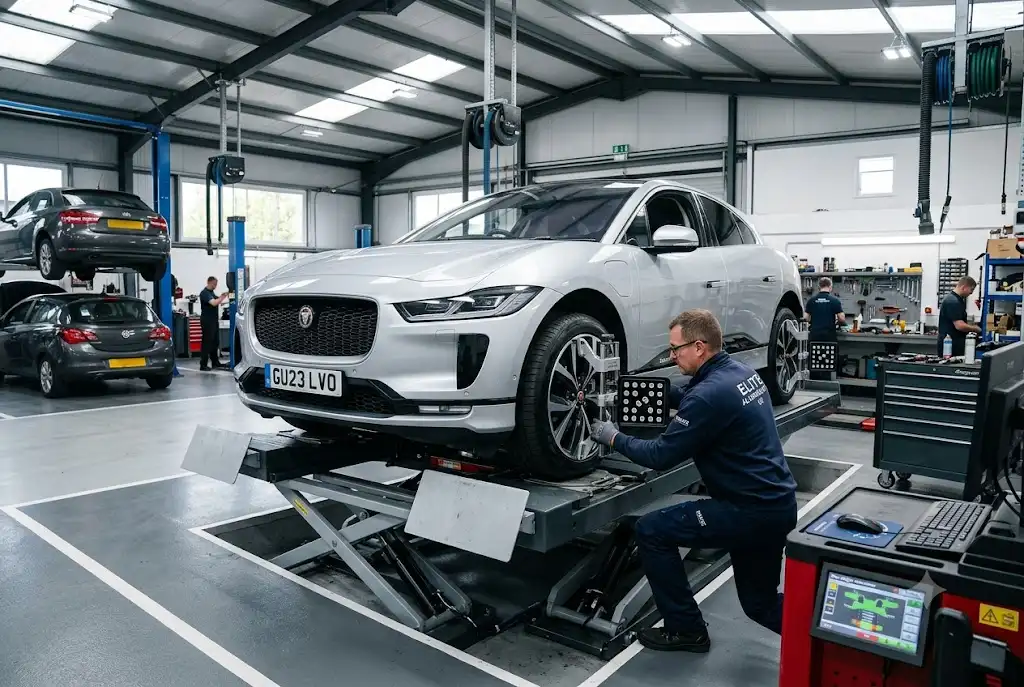
Wheel alignment is an important part of vehicle maintenance that helps your tyres meet the road correctly and allows the steering system to behave as intended. When alignment is incorrect, a car may pull to one side, the steering wheel can sit off-centre, and tyres may wear unevenly.
Although alignment problems can develop gradually, they should not be ignored. Poor alignment can affect handling, tyre life and overall driving confidence. This guide explains what wheel alignment means, what causes problems, which warning signs to look for and when professional checks may be worthwhile.
What Is Wheel Alignment?
Wheel alignment refers to the adjustment of the angles of the wheels so they match the vehicle manufacturer’s specifications. These settings influence how the tyres sit against the road and how the vehicle responds when you steer.
Modern vehicles use carefully calculated alignment settings rather than simply having every wheel positioned perfectly straight. Depending on the vehicle, technicians may assess measurements such as toe, camber and caster.
When these angles move outside their intended range, the vehicle can become less predictable or the tyres can begin wearing unevenly. Alignment can be affected by impacts, worn components, suspension problems and normal use over time.
Why Wheel Alignment Matters
Correct wheel alignment contributes to several aspects of everyday driving. It can help maintain even tyre contact with the road, support predictable steering behaviour and reduce unnecessary tyre wear.
It is particularly relevant for drivers who regularly use uneven roads, encounter potholes or have experienced a significant impact with a kerb. Even when there is no obvious damage, a strong impact can alter suspension or steering geometry.
Proper alignment also works alongside other forms of vehicle maintenance. For example, EV servicing and hybrid servicing involve broader maintenance requirements, but tyre condition, steering and suspension remain important considerations for these vehicles too.
Common Signs You May Need Wheel Alignment
Alignment problems do not always produce a dramatic warning. In many cases, drivers notice subtle changes in how the vehicle feels or how the tyres are wearing.
The Vehicle Pulls to One Side
If your car consistently drifts or pulls left or right when you are driving on a reasonably level road, alignment is one possible cause. However, tyre pressures, road camber and suspension faults can also influence the way a vehicle tracks.
A persistent pull should therefore be investigated rather than automatically attributed to alignment.
The Steering Wheel Is Off-Centre
If the vehicle travels relatively straight but the steering wheel remains noticeably turned to one side, the steering and wheel geometry may require inspection.
An off-centre steering wheel can also follow suspension or steering work. If a component has recently been replaced or adjusted, an alignment check may be appropriate.
Uneven Tyre Wear
One of the most useful clues is unusual or uneven tyre wear. If one edge of a tyre is wearing faster than the other, incorrect alignment can be a contributing factor.
However, uneven wear can have several causes, including incorrect tyre pressure, worn suspension components and other mechanical issues. That is why a proper inspection is more useful than simply replacing the tyre.
The Car Feels Unstable
Changes in steering response or vehicle stability can sometimes indicate an alignment or suspension issue. You might notice that the vehicle does not feel as settled as it normally does, particularly during cornering or when making small steering corrections.
Because stability concerns can have multiple causes, they deserve prompt attention rather than being treated as a minor inconvenience.
Wheel Alignment vs Wheel Balancing
Wheel alignment and wheel balancing are different services, although drivers sometimes confuse them.
Alignment concerns the geometry and positioning of the wheels in relation to the vehicle and road. Balancing is concerned with the distribution of weight around a wheel and tyre assembly.
An imbalance can commonly contribute to vibration, particularly at certain speeds. Alignment problems are more commonly associated with issues such as uneven tyre wear, steering that does not feel right or a vehicle that does not track as expected.
Both services can form part of sensible tyre and chassis maintenance, but one does not replace the other.
What Causes Wheel Alignment Problems?
Several situations can affect alignment settings. One of the most common is a significant impact with a pothole or kerb. UK roads can expose vehicles to uneven surfaces, making impacts an unavoidable part of driving for many motorists.
Other potential causes include worn suspension components, steering component wear and previous mechanical work. Changes to suspension components can alter wheel geometry, which is why alignment may be recommended after certain repairs.
Normal wear can also become relevant over time. An alignment check can help identify whether the current geometry remains within the manufacturer’s specified range.
When Should You Get a Wheel Alignment Check?
There is no single mileage interval that applies equally to every vehicle. Instead, alignment checks are often more relevant after specific events or when symptoms appear.
Consider having the alignment assessed if you have:
- Hit a significant pothole or kerb
- Noticed persistent pulling to one side
- Found unusual or uneven tyre wear
- Seen that the steering wheel is no longer centred
- Had steering or suspension components replaced
- Experienced a noticeable change in handling
A check can also provide useful reassurance when fitting new tyres, particularly if the previous tyres showed unusual wear patterns.
Wheel Alignment and Tyre Wear
Tyres are among the clearest places where alignment problems can become visible. When wheel angles are outside their intended specifications, a tyre may not contact the road evenly across its tread.
That can contribute to accelerated or irregular wear. Once an alignment problem has caused significant damage to a tyre, correcting the alignment will not restore the worn tread. The underlying issue needs to be addressed to help protect the replacement tyre.
Regularly checking tyre condition and pressure can therefore complement an alignment inspection. Drivers should also pay attention to tread condition, visible damage and changes in handling.
What Happens During a Wheel Alignment Service?
A professional alignment service normally begins with an inspection of the vehicle and its wheels. The technician may check tyre condition, tyre pressures and relevant steering or suspension components before taking alignment measurements.
Specialist equipment is then used to measure the vehicle’s wheel geometry. Where adjustments are possible and necessary, the technician can bring the relevant settings closer to the manufacturer’s specifications.
This distinction is important. If a suspension or steering component is worn or damaged, simply adjusting alignment may not solve the underlying problem. A proper service should therefore consider the condition of the vehicle as a whole.
Does Every Alignment Problem Need Immediate Repair?
The urgency depends on the symptoms and the underlying cause. A minor measurement difference may not produce obvious handling changes, while a serious steering, suspension or tyre issue can have a much greater impact.
If the vehicle is pulling strongly, steering behaviour has changed suddenly, a tyre is wearing rapidly or there are signs of mechanical damage, it is sensible to arrange an inspection promptly.
Drivers should not rely solely on alignment as an explanation for every steering problem. A qualified technician can distinguish between alignment issues, tyre problems and faults elsewhere in the steering or suspension system.
How Wheel Alignment Fits Into a Maintenance Guide
Wheel alignment should be viewed as one part of a wider maintenance routine rather than a standalone service. Tyre pressures, tread condition, braking components, suspension and steering all contribute to how a vehicle performs on the road.
For example, suspension checks can identify worn components that may affect handling and alignment. Regular tyre inspections can reveal uneven wear before it becomes severe. Keeping these areas under review can make it easier to identify problems early.
This approach is particularly useful as vehicles become more diverse. Electric and hybrid cars have different powertrain requirements, but basic road-contact components such as tyres, steering and suspension remain essential to safe and predictable driving.
How Much Does Wheel Alignment Cost in the UK?
The cost of an alignment service varies according to the vehicle, the type of alignment required, the workshop and whether additional repairs are needed. A basic alignment measurement and adjustment may cost less than a service that involves investigating worn steering or suspension components.
For that reason, it is better to compare what is included in a quoted service rather than choosing solely on the advertised price. Ask whether the inspection covers the relevant wheels and whether adjustments are included.
If a technician identifies damaged components, those repairs may need to be completed before the alignment can be set correctly.
How to Choose a Wheel Alignment Service
When selecting a garage, look for a business that can explain the issue clearly and provide appropriate measurements or findings. Professional equipment is important, but so is the technician’s ability to identify whether the problem originates from alignment or another part of the vehicle.
It can also be useful to choose a workshop that offers broader vehicle maintenance. This makes it easier to investigate related problems such as tyre wear, steering issues and suspension faults without treating each symptom in isolation.
For motorists comparing larger garage chains with local providers, factors such as convenience, equipment, service coverage and customer support can all be considered alongside price.
Final Thoughts on Wheel Alignment
Wheel alignment plays an important role in maintaining predictable steering, even tyre wear and confident vehicle handling. It is especially worth considering after a significant pothole or kerb impact, following certain steering or suspension repairs, or whenever the vehicle begins behaving differently.
Alignment should not be treated as a cure-all for every handling problem. Tyres, suspension, steering and wheel balancing can all influence how a vehicle feels on the road. A professional inspection can help identify the actual cause and determine whether adjustment or further repair is required.
For UK motorists, making alignment checks part of a sensible maintenance routine can help spot problems earlier and support the longer-term condition of the vehicle.
For broader roadworthiness and vehicle maintenance information, motorists can also consult the UK government’s MOT guidance for official information about MOT testing requirements.