DIY home repairs can help homeowners deal with many small household problems without immediately calling a professional. From tightening loose fittings and repairing minor wall damage to replacing simple household components, learning basic repair skills can save time, reduce disruption and help you understand how your home works.
However, DIY does not mean attempting every repair yourself. Some electrical, gas, structural and other specialist jobs require qualified professionals. The key is knowing which tasks are suitable for basic DIY skills and which problems should be handed over to an expert.
This guide covers practical DIY home repairs, essential tools, basic safety considerations and simple maintenance habits that can help keep a UK home in better condition.
Why Learn DIY Home Repairs?
Homes naturally develop small problems through everyday use. A loose cupboard handle, sticking door, damaged wall surface or dripping tap may not require a major repair service, but ignoring minor issues can sometimes allow them to become more troublesome.
Basic DIY skills can help you respond to these problems quickly. They can also make routine home service bookings more effective because you will have a better understanding of the problem when professional assistance is required.
DIY can also be useful for homeowners who want to carry out regular maintenance rather than waiting until something breaks completely.
Essential Tools for Basic Home Repairs
You do not need a professional workshop to handle common household tasks. A small, organised toolkit can cover many basic jobs.
Useful items include:
- Flat-head and Phillips screwdrivers
- Adjustable wrench
- Hammer
- Tape measure
- Spirit level
- Utility knife
- Combination pliers
- Hex key set
- Drill and suitable drill bits
- Wall plugs and screws
- Electrical tape for appropriate non-electrical repair uses
- Protective gloves and safety glasses
Keep tools clean and stored safely. Using the correct tool for a particular job is also important because the wrong tool can damage fittings or increase the risk of injury.
DIY Home Repairs for Loose Handles and Hinges
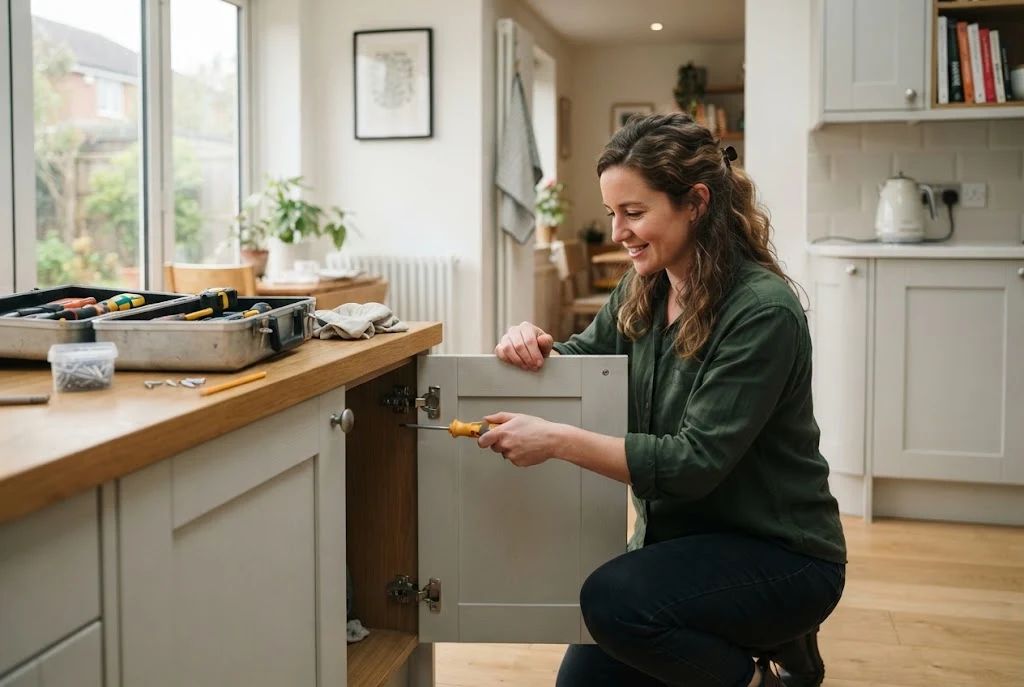
Loose door handles, cabinet handles and hinges are among the simplest household problems to address. In many cases, the problem is caused by screws gradually becoming loose through repeated use.
Start by checking the screws and tightening them with the appropriate screwdriver. Do not overtighten them, particularly when the fitting is attached to a soft material that could be damaged.
If a screw no longer grips because the surrounding material has deteriorated, the repair may require a different fixing method. For example, damaged timber may need appropriate filling or a replacement fixing rather than simply tightening the original screw.
Fix Small Holes and Cracks in Walls
Small nail holes and minor surface damage can often be repaired with suitable filler. Remove loose material around the damaged area, apply the filler according to the manufacturer’s instructions and allow it to dry before sanding the surface smooth.
After preparing the area, you can repaint it to match the surrounding wall.
However, not every crack should automatically be treated as a cosmetic problem. Large, recurring or unusual cracks may require professional assessment, particularly if there are other signs of movement or structural damage.
Repair a Sticking Interior Door
A sticking internal door can be frustrating, especially when it gradually becomes harder to open and close. First identify where the door is catching. Look around the frame and edges for visible contact points.
Check whether the hinges are loose and tighten them if necessary. If the door has swollen because of changes in humidity, minor adjustment may sometimes resolve the problem. Avoid removing significant amounts of material until you have established exactly where the door is catching.
If the frame appears damaged or the door has moved significantly, a more detailed assessment may be necessary.
Fix a Dripping Tap
A dripping tap can sometimes be caused by a worn washer, cartridge or another internal component. The precise repair depends on the tap design.
Before attempting a repair, identify the water isolation valve and make sure you know how to shut off the relevant water supply. Then follow the manufacturer’s instructions for the tap where available.
If you cannot identify the source of the leak, the fitting is badly corroded or water continues to escape after the repair, professional help may be appropriate.
Simple DIY Fixes for Furniture
Furniture can develop loose joints, handles and fittings after years of use. Before replacing a piece of furniture, inspect its fixings.
A loose chair joint may require appropriate wood adhesive and clamping, while a cabinet door may only need hinge adjustment. Flat-pack furniture can also develop loose connections when fasteners gradually work loose.
Always follow the manufacturer’s assembly or repair instructions when they are available, particularly for furniture that supports significant weight.
How to Fix Home Appliances Safely
Knowing how to fix home appliances can be useful, but appliance repairs require more caution than simple cosmetic or mechanical tasks.
Start with basic checks that do not involve opening the appliance. Confirm that it is receiving power, check whether a circuit breaker has tripped, inspect the manufacturer’s error message and consult the user manual.
For appliances covered by a warranty, check the warranty conditions before arranging repairs or dismantling anything.
Do not attempt internal electrical repairs unless you have the appropriate knowledge and qualifications. Disconnecting an appliance from the power supply does not automatically make every internal repair safe.
DIY Handyman Near Me: When Should You Call Someone?
People searching for a diy handyman near me may actually be trying to decide whether a job is suitable for DIY or whether they need professional assistance.
A useful rule is to consider the complexity, risk and consequences of getting the job wrong.
DIY may be reasonable for tasks such as:
- Tightening loose screws
- Replacing simple decorative fittings
- Filling small wall holes
- Assembling furniture according to instructions
- Adjusting suitable cabinet hardware
- Carrying out basic non-specialist maintenance
Professional assistance is more appropriate when the job involves significant electrical work, gas appliances, major plumbing problems, structural changes, roofing or another specialist area where mistakes could create safety or property risks.
Basic Home Repair Tips for Safer DIY
Good preparation is one of the most important parts of successful DIY. Before starting a repair, understand what you are going to do and gather the necessary tools and materials.
Use appropriate protective equipment and keep children and pets away from the work area. If drilling into walls, consider what may be hidden behind the surface before making a hole.
For any job involving water, know where the relevant isolation valve is. For electrical problems, avoid experimenting with wiring if you are not qualified to carry out the work.
Never rush because a repair appears simple. A few extra minutes spent checking the instructions and preparing the workspace can prevent avoidable damage.
DIY Home Repairs and Regular Maintenance
The best approach to DIY is not simply fixing problems after they occur. Regular inspections can help you notice small issues earlier.
Useful home maintenance tips include checking for leaks, inspecting visible seals, keeping gutters and drainage areas clear where appropriate, checking doors and windows, looking for signs of damp and maintaining household equipment according to manufacturer instructions.
Keeping a simple maintenance schedule can also help you remember seasonal tasks. This is particularly useful for homeowners who want to plan repairs instead of dealing with several unexpected problems at once.
When DIY Can Make a Problem Worse
DIY is not always the cheaper option if an incorrect repair causes additional damage. A small mistake with a fitting may be easy to correct, but a poorly handled water leak or electrical problem can create much larger consequences.
Be especially cautious when a repair involves hidden pipes, wiring, gas equipment, structural components or significant water damage. If you are unsure about the risks, getting professional advice can be more sensible than continuing with trial and error.
Similarly, tenants should check their tenancy agreement and responsibilities before carrying out repairs. Some maintenance issues may be the responsibility of the landlord or property manager.
DIY Home Repairs: Know Your Limits
The purpose of DIY home repairs is not to turn every homeowner into a professional tradesperson. Instead, basic DIY knowledge can help you handle straightforward household tasks, recognise developing problems and make better decisions about when to seek specialist help.
Start with low-risk jobs and build your skills gradually. Keep essential tools available, follow manufacturer instructions and avoid work that requires specialist qualifications or presents significant safety risks.
For larger problems, a professional can provide the appropriate assessment and repair. When you need outside assistance, researching providers carefully and arranging a suitable appointment through a reliable online home-service booking process can make the next step easier.
With sensible preparation and regular maintenance, homeowners can take care of many everyday issues while knowing when a repair has moved beyond the appropriate limits of DIY.