Home electrical repairs can range from replacing a damaged socket to fixing a faulty light, investigating repeated power trips or dealing with wiring problems. While some minor maintenance may appear straightforward, electrical faults can create serious safety risks if they are incorrectly diagnosed or repaired. Knowing when to seek professional help, what warning signs to look for and how regular maintenance can protect your household makes electrical problems much easier to manage.
What Are Home Electrical Repairs?
Home electrical repairs cover the diagnosis and repair of faults affecting the electrical systems, fixtures and appliances within a property. Depending on the problem, this could involve sockets, switches, lighting, consumer units, wiring, circuit protection or other fixed electrical installations.
Common household electrical repairs include fixing faulty sockets, replacing damaged switches, investigating flickering lights, resolving circuits that repeatedly trip and identifying problems caused by damaged or ageing wiring. Some issues may be relatively simple, while others require a qualified electrician to inspect the installation and determine the underlying cause.
It is important not to treat every electrical fault as a DIY job. Electrical installations can remain dangerous even when the visible problem appears minor. A professional assessment can help identify issues that are not immediately obvious.
When Do You Need Home Electrical Repairs?
Electrical problems often provide warning signs before they develop into more serious faults. Recognising those signs early can help prevent further damage and reduce unnecessary disruption.
Flickering or Dimming Lights
Occasional changes in lighting may have a simple explanation, but persistent flickering or dimming should not be ignored. It can indicate a loose connection, overloaded circuit or another electrical issue that needs investigation.
Frequently Tripping Circuits
If a circuit breaker or residual current device repeatedly trips, there may be a fault with an appliance, circuit or electrical installation. Resetting the protection repeatedly without finding the cause is not a reliable solution.
Burning Smells or Discolouration
A burning smell around a socket, switch or electrical appliance is a warning sign that deserves immediate attention. Brown or black marks, melted plastic and scorch marks can also indicate overheating.
Damaged Sockets and Switches
Cracked, loose, broken or visibly damaged sockets and switches should be assessed rather than left in use. Damage can expose components or create conditions where an electrical fault becomes more likely.
Buzzing or Crackling Sounds
Unusual buzzing, sizzling or crackling from an electrical fitting is another reason to arrange an inspection. Electrical components should operate without persistent unusual sounds.
How Professional Home Electrical Repairs Work
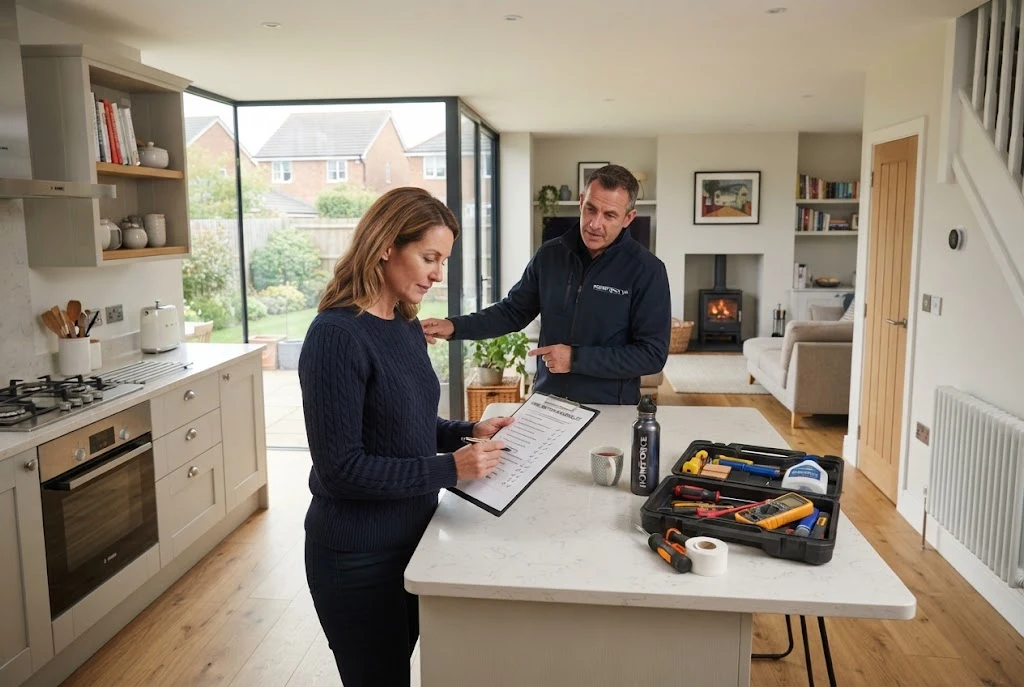
A professional repair normally begins with an assessment of the reported problem. The electrician may ask when the fault occurs, which appliances or circuits are affected and whether there have been previous issues.
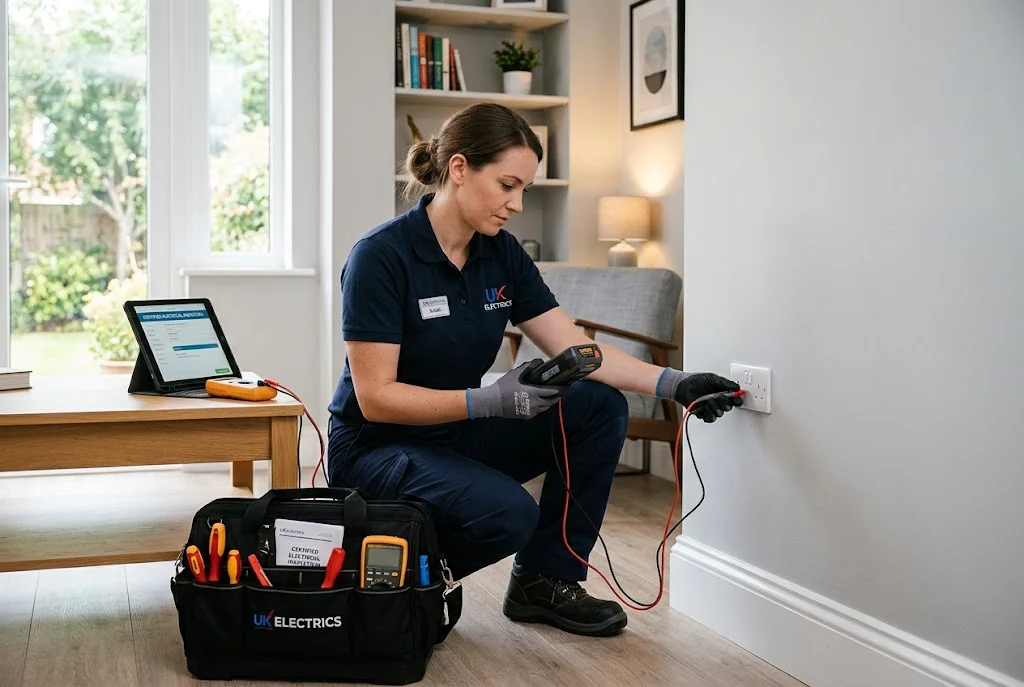
They can then inspect the relevant equipment or installation, identify the likely cause and determine the safest way to resolve it. Depending on the fault, the work may involve replacing a damaged component, repairing a connection, testing a circuit or recommending further investigation.
Good electrical work is not simply about making a problem disappear. The underlying cause should be considered so that a temporary fix does not conceal a potentially dangerous fault.
Home Electrical Repairs and Electrical Safety
Electrical safety should remain the priority whenever work is carried out in a property. The Electrical Safety First guidance provides useful consumer information on electrical safety, common hazards and safer practices in the home.
Homeowners and tenants should also avoid attempting work that requires specialist knowledge or access to parts of an electrical installation they are not competent to work on. Turning off a switch does not necessarily make an electrical system safe to work on.
If you notice smoke, exposed wiring, a strong burning smell, signs of overheating or another potentially dangerous fault, stop using the affected equipment or area and seek appropriate professional assistance. If there is an immediate risk of fire or injury, contact the relevant emergency services.
Electrical Handyman Near Me or Qualified Electrician?
People searching for an electrical handyman near me may be looking for a convenient way to deal with small household jobs. However, the important consideration is whether the work involves the property’s electrical installation and whether the person carrying it out has the appropriate competence and qualifications.
Simple non-electrical tasks around a property may be suitable for a general handyman. Electrical installation, fault finding and other specialist electrical work should be approached differently. Choosing an appropriately qualified professional can provide greater confidence that the fault will be assessed and repaired safely.
Before arranging work, ask what the contractor is qualified and competent to do, whether the work requires certification and what testing will be carried out afterwards. For significant electrical work, documentation can also be important for future property maintenance and records.
Household Electrical Repairs That Should Not Be Ignored
Some household electrical repairs can be postponed for a short period when they are minor and non-urgent. Others should be investigated promptly.
Repeated power loss, overheating sockets, exposed conductors, burning smells and unexplained circuit trips deserve particular attention. Continuing to use a faulty electrical fitting can potentially make the problem worse.
It is also worth paying attention to older electrical installations. Age alone does not automatically mean that an installation is unsafe, but older systems may benefit from professional assessment, particularly if the property has undergone extensions, renovations or changes in electrical demand.
Can Home Electrics Cover Pay for Repairs?
Some households consider home electrics cover as a way of managing the cost and inconvenience of unexpected electrical faults. These products can differ considerably, so the exact terms matter more than the name of the policy or membership.
Depending on the provider and plan, cover may include certain electrical emergencies, call-out support or repair costs subject to specified conditions. There may also be exclusions, claim limits, excesses, waiting periods or restrictions relating to the age and condition of equipment.
For that reason, homeowners should read the policy wording carefully rather than assuming that every electrical problem is automatically covered. It is also useful to compare the cost of cover with the level of protection actually provided.
Plumbing and Electrics Cover: What Does It Mean?
Some home assistance products combine different household emergencies under one plan. Plumbing and electrics cover may therefore appear attractive to households that want one arrangement for several common property problems.
However, combined cover can vary significantly between providers. One plan might focus on emergency call-outs, while another may include broader repair assistance. Limits, exclusions and definitions of an emergency should always be checked before buying.
This is particularly relevant when comparing specialist electrical support with broader home emergency policies. The cheapest option is not necessarily the most useful if the specific fault you are concerned about falls outside the terms.
Home Electrical Repairs vs Preventive Maintenance
Repairing an electrical fault after it occurs is only one part of responsible home maintenance. Preventive checks can help identify deterioration before a minor issue becomes a major disruption.
Keep an eye on sockets, switches, visible cables and electrical accessories. Avoid overloading extension leads and do not use damaged cables or plugs. Appliances should also be maintained according to their manufacturer’s instructions.
Where there are concerns about the condition of an electrical installation, arranging a professional inspection can provide a more reliable assessment than relying on visual checks alone.
How to Choose an Electrician for Home Services
When looking for electrician home services, focus on competence, experience and the type of work required rather than choosing solely on price.
- Ask whether the electrician is appropriately qualified for the work.
- Explain the symptoms of the fault clearly before the visit.
- Request a clear explanation of the proposed repair.
- Ask whether testing or certification will be provided where applicable.
- Check what is included in the quoted price.
- Keep records of significant electrical work completed at the property.
For urgent problems, availability also matters. However, urgency should not mean abandoning basic checks about competence and the scope of work.
How Electrical Repairs Fit Into Wider Home Maintenance
Electrical systems are only one part of keeping a property safe and functional. Plumbing faults, heating problems and other household emergencies can also cause significant disruption. Understanding how different services fit together can make it easier to plan maintenance rather than dealing with each problem in isolation.
For example, homeowners researching electrical protection may also want to understand plumbing services near me when comparing options for broader household maintenance. Similarly, those considering combined protection can learn more about home emergency cover and how it may differ from standalone electrical assistance.
The key is to choose services based on the actual needs of the property. A household with an older electrical installation may have different priorities from someone mainly concerned about emergency call-out costs.
Final Thoughts on Home Electrical Repairs
Home electrical repairs should be approached with safety and proper diagnosis in mind. Problems such as flickering lights, damaged sockets, repeated circuit trips, burning smells and unusual electrical noises should not simply be ignored.
While household maintenance can reduce avoidable problems, electrical faults often require professional assessment. Likewise, home electrics cover or combined emergency protection can provide useful support, but only when the terms match the risks and needs of the household.
By responding to warning signs early, using competent professionals and keeping electrical maintenance alongside other essential home services, homeowners can make their properties safer, more reliable and easier to manage.