Gas appliance servicing is an important part of keeping a UK home safe, particularly when a property relies on gas for heating, hot water or cooking. Boilers, gas fires, cookers and other gas appliances can work reliably for years when properly installed, maintained and serviced, but faults should never be ignored.
Regular servicing is not simply about keeping an appliance running. It can help identify problems before they become more serious and gives homeowners an opportunity to check that appliances are operating as intended. Whether you have recently moved home or have used the same boiler for years, understanding when servicing is needed can make household maintenance easier.
What Is Gas Appliance Servicing?
Gas appliance servicing involves having a suitably qualified professional inspect and service a gas appliance according to the relevant requirements and the manufacturer’s instructions. The precise checks depend on the appliance, its design and the work being carried out.
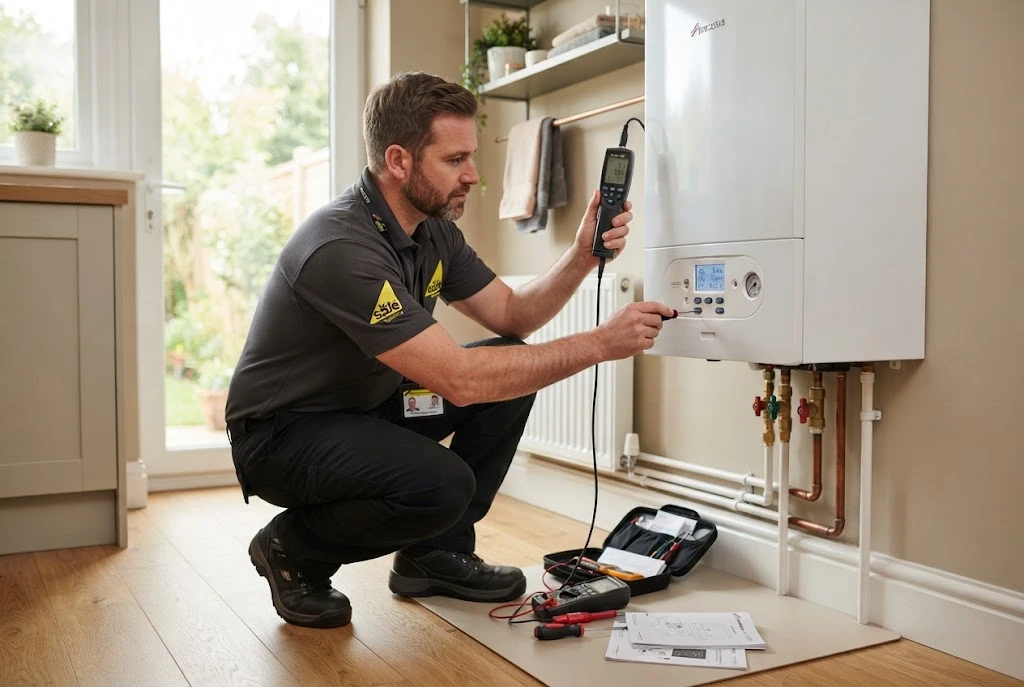
A service may involve examining the appliance, checking its operation, looking for signs of deterioration and carrying out relevant safety checks. For a boiler, the process can also involve inspecting components and checking that the appliance is operating correctly.
Servicing should not be confused with a repair. A service is generally preventative and checks the condition and operation of an appliance, whereas a repair is intended to correct a fault that has already developed.
Why Gas Appliance Servicing Matters in UK Homes
Gas appliances need to be treated differently from ordinary electrical household equipment because incorrect installation, poor maintenance or faults can create serious safety risks. That is why homeowners should use appropriately qualified professionals for gas work.
Regular servicing can also help identify signs of wear or malfunction. Finding an issue earlier may make it easier to address before the appliance develops a more disruptive fault.
For landlords, responsibilities can be different from those of owner-occupiers. Landlords should understand the specific gas safety duties that apply to their properties rather than relying on a general home-maintenance routine.
The Health and Safety Executive provides guidance on gas safety in domestic properties, including information relevant to homeowners, tenants and landlords.
Which Gas Appliances May Need Servicing?
Several types of appliances found in UK homes can use gas. The exact maintenance requirements depend on the appliance and manufacturer, so homeowners should check the relevant instructions and arrange appropriate professional attention.
- Gas boilers
- Gas fires
- Gas cookers
- Gas hobs
- Other permanently installed domestic gas appliances
A boiler often receives the most attention because it can provide both heating and hot water. However, other gas appliances should not be forgotten simply because they are used less frequently.
Gas Appliance Repairs vs Gas Servicing
Understanding the difference between gas appliance repairs and servicing can help homeowners choose the right type of professional support.
If an appliance has stopped working, repeatedly switches off, produces unusual symptoms or shows a fault indication, it may require diagnosis and repair. Servicing, by contrast, is generally arranged as preventative maintenance when an appliance is functioning but needs its condition and operation checked.
Do not attempt to diagnose or repair gas components yourself. If you suspect that a gas appliance is unsafe, stop using it where appropriate and seek professional advice.
How Often Should You Arrange Gas Servicing?
There is no single servicing interval that applies identically to every gas appliance. The appropriate schedule can depend on the appliance, manufacturer recommendations, its condition and the circumstances in which it is being used.
For many households, arranging an annual boiler service is a sensible way of keeping regular maintenance on the calendar. However, homeowners should follow the manufacturer’s guidance and any applicable professional recommendations for their specific appliance.
It is also worth arranging attention sooner if you notice a change in performance, unusual noises, repeated shutdowns or other warning signs. Waiting for the next scheduled appointment may not be appropriate when an appliance is showing signs of a potential fault.
Gas Servicing for Boilers and Gas Fires
Some households have both a central-heating boiler and a gas fire. In that situation, homeowners may search for a boiler and gas fire service to simplify their maintenance arrangements.
Whether both appliances can be dealt with during the same visit depends on the professional, the appliances and the work required. Before booking, explain exactly which appliances you want checked and ask what is included in the service.
People looking for a gas fire and boiler service near me should also verify that the professional is appropriately qualified for the gas work required. Location alone should not be the deciding factor when choosing someone to work on gas appliances.
What Happens During a Gas Appliance Service?
The exact procedure varies by appliance, but a professional service will normally be tailored to the equipment being inspected. The engineer may examine the appliance and relevant components, assess its condition and carry out appropriate safety and operational checks.
For a boiler, the engineer may assess its operation and inspect relevant parts in line with the manufacturer’s requirements. If a problem is identified, the homeowner should be told what has been found and whether further work is recommended.
A service should never be treated as a guarantee that an appliance will not develop a fault later. It is part of a broader approach to preventative maintenance and safety.
Signs Your Gas Appliance May Need Attention
Regular servicing is important, but homeowners should also pay attention to changes between appointments. Potential warning signs can include:
- Unusual noises during operation
- Repeated shutdowns or failed starts
- Unexpected changes in heating or hot-water performance
- Visible damage around an appliance
- Persistent unusual smells
- Changes in appliance behaviour or performance
- Warning lights or fault codes on appliances that display them
Not every symptom means that a gas appliance is dangerous, but unusual behaviour should not simply be ignored. A qualified professional can assess the appliance and determine what action is appropriate.
Gas Safety Should Be Part of Your Wider Home Maintenance Plan
Gas servicing should not sit separately from the rest of your household maintenance routine. A well-managed home benefits from keeping track of heating equipment, electrical systems, plumbing, appliances and general repairs together.
Our guide to home maintenance services provides a broader look at managing essential property upkeep, while homeowners comparing different types of local support can also explore our guide to home services near me.
This broader approach is useful because a property rarely has just one maintenance requirement. A boiler may need servicing, a kitchen appliance may require repair and a small household repair may need a handyman. Planning these jobs systematically can make home upkeep less stressful.
How to Choose Someone for Gas Servicing
Choosing the right professional is particularly important for gas work. Homeowners should check the relevant qualifications and registration requirements before allowing someone to work on a gas appliance.
Do not choose a professional solely because they offer the cheapest quotation. Ask what the service includes, whether they are qualified for the particular appliance and whether they can provide appropriate documentation after the work.
It can also help to describe the appliance clearly before booking. Give the make and model where available and explain whether you are requesting routine servicing or dealing with a suspected fault.
What About a Service for a Gas Boiler?
If your main heating system is gas-powered, arranging a service for gas boiler equipment can be an important part of your annual household maintenance routine.
Before booking, check your boiler documentation for the manufacturer’s recommendations. Keep previous service records where possible, as they can help you and future professionals understand the appliance’s maintenance history.
If a boiler develops a fault, do not assume that a routine service will solve the problem. A repair or diagnostic visit may be more appropriate. This distinction can also help when comparing service plans or maintenance packages.
Can Servicing Prevent Every Gas Appliance Problem?
No maintenance programme can guarantee that an appliance will never fail. Components can wear out, unexpected faults can occur and older equipment may eventually become uneconomical to repair.
The purpose of servicing is therefore not to eliminate every possible problem. Instead, it forms part of a sensible preventative approach that combines professional checks, correct use, appropriate maintenance and prompt attention to warning signs.
Homeowners should also avoid assuming that an appliance is safe simply because it is still working. An appliance can continue operating while developing an issue that needs professional attention.
Gas Appliance Servicing and Home Appliance Care
Gas appliances are only one part of a home’s equipment. The same preventative mindset can be applied to refrigerators, washing machines, dishwashers and other domestic appliances.
Our article on appliance insurance in the UK looks at another side of household appliance management, including the question of whether protection against unexpected repair costs is worthwhile.
Good kitchen appliance care also involves following manufacturer instructions, keeping equipment clean where appropriate and responding quickly when an appliance begins behaving differently.
What UK Homeowners Should Do If They Suspect a Gas Problem
If you suspect a gas leak or believe a gas appliance may be unsafe, treat the situation seriously. Avoid attempting to repair the appliance yourself. Follow the appropriate emergency gas-safety guidance and contact the relevant emergency or qualified professional service.
Carbon monoxide is another important consideration because it cannot be detected by normal human senses. Properly maintained appliances, appropriate ventilation and a suitable carbon monoxide alarm can form part of a broader household safety approach.
Homeowners should also make sure that gas appliances are not modified or repaired by unqualified individuals. Cutting corners on gas work can create risks that far outweigh any short-term saving.
Final Thoughts on Gas Appliance Servicing
Gas appliance servicing is an important part of responsible home maintenance for properties that use gas appliances. Regular professional attention can help identify problems, maintain equipment and give homeowners greater confidence that their appliances are being looked after appropriately.
The key is to treat servicing as preventative maintenance rather than waiting until an appliance breaks down. Keep records, follow manufacturer recommendations, respond to warning signs and make sure gas work is carried out by an appropriately qualified professional.
When gas servicing is combined with wider home maintenance planning, homeowners can take a more organised approach to protecting their property, its equipment and the people living inside it.